
Hannah: "it's the first time I felt more than a set of notes"
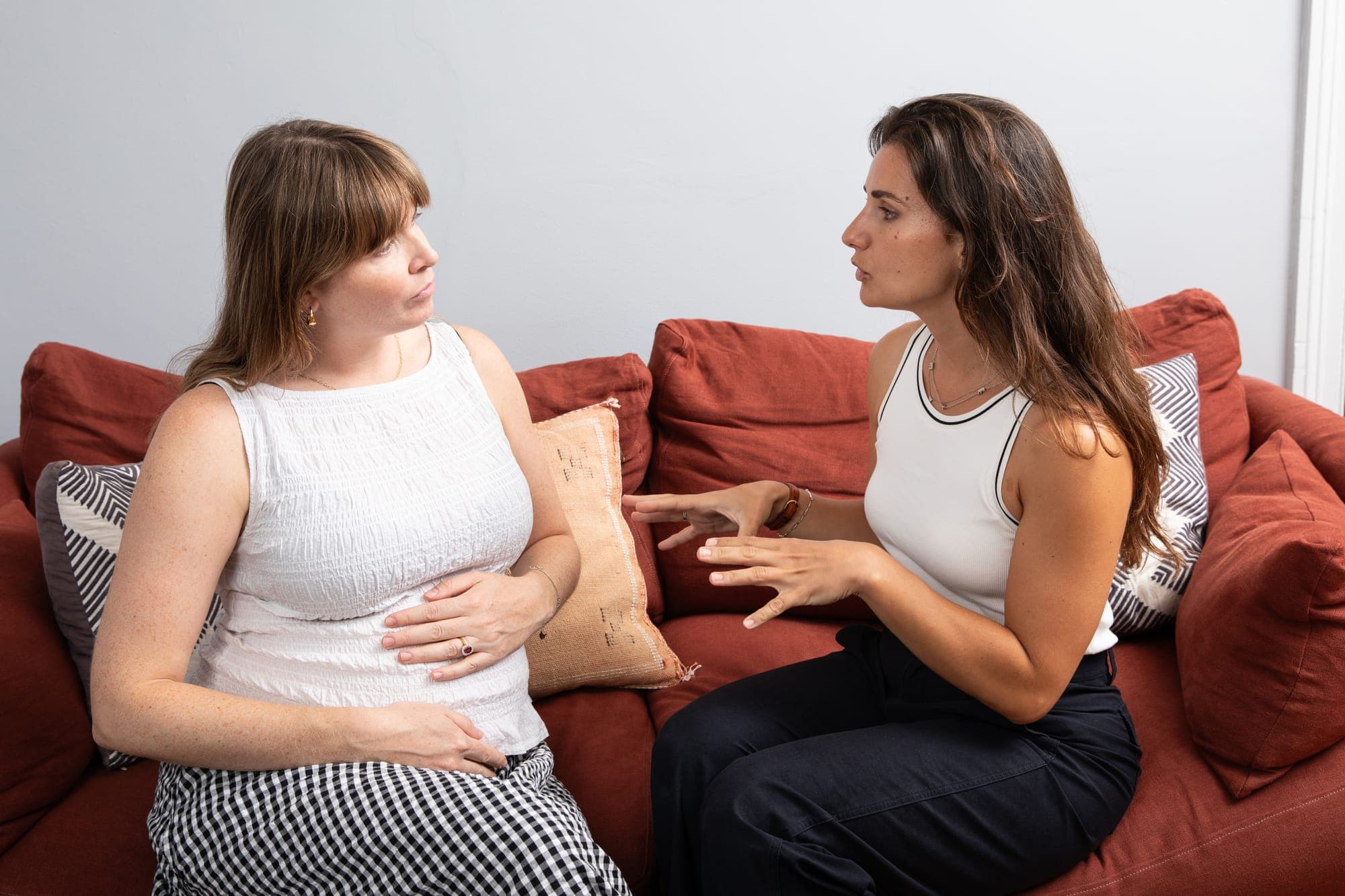
Hannah was pregnant with her first child. She was doing everything she was supposed to do, attending her appointments at the hospital and turning up on time. And yet, somewhere in the middle of it all, something felt quietly wrong.
The appointments were short. The midwife was different each time. And more than once, Hannah left a consultation having been handed a leaflet about a decision she was expected to make, with no one in the room to actually talk her through it. Her notes were in the system. But notes didn't know her. She found herself going home and researching her options alone, coming back with a view, and having it noted down. That was the system. You did your own research, communicated your conclusions, and the clinical team proceeded accordingly.
She had a question that she couldn't quite shake: wasn't this supposed to work the other way around?
The gap nobody warned her about
It is easy, as a first-time mother, to assume that the uncertainty you feel is yours to manage. That Googling at midnight is simply part of the experience. That not knowing your midwife's name, or seeing a different face at each appointment, is standard. That consultations are short because there isn't much to say yet.
None of that is true. It is a consequence of a maternity system under significant pressure, staffed by people working hard within real constraints. But the result, for many first-time mothers, is that their pregnancy feels like something that is being monitored rather than supported. The scans happen. The forms are completed. The weeks pass. And the deeper questions, about what to expect, what to ask, what they actually want from their birth, remain largely unanswered.
Hannah's experience was enough to make her want to write about it. Her piece appeared in The Sunday Times, drawing on her encounter with Kove, the pilot that became The Motherhood Practice. What struck her was not that private midwifery existed, but that a visit from a midwife who had time, who explained things, who asked questions and listened to the answers, felt so different from what she had experienced before. Not a luxury. A revelation about what care could feel like.
What a different kind of appointment looks like
When Clarissa visited Hannah at home, the appointment was two hours long. There was no queue, no computer screen between them, no sense of time running out before they'd reached anything that mattered. There was space to talk about what was coming, to ask the questions that felt too small or too large for a standard consultation, to understand the options rather than simply present a decision.
This is what continuity of care actually means in practice. Not just seeing the same face, though that matters too. It means having a midwife who builds a picture of you over time: your history, your anxieties, the things you haven't said yet because the appointment was over before you found the words. It means being able to open up about what you're really worried about, because you're not starting from scratch with a stranger every four weeks.
For a first-time mother, who has nothing to compare this experience to, that kind of care is particularly significant. You don't yet know what questions to ask. You don't know what normal is supposed to feel like. Having a midwife who proactively explains your options, who tells you what's coming before you have to ask, who treats the appointment as a conversation rather than a checklist, gives you something that no amount of late-night research can provide: a genuine sense of being prepared.
Knowing what is possible
Hannah's instinct, once she had experienced something different, was to share it. Not out of dissatisfaction with the people she had encountered in the NHS, who were doing their jobs within a stretched system, but because she hadn't known another kind of care was possible. And she suspected she wasn't alone in that.
She was right. Most first-time mothers don't know what to expect from their maternity care, so they accept what they receive. Many only recognise the gap in retrospect, after the birth, or after talking to someone who had a different experience. The question Hannah found herself asking, and that stays with us, is a simple one: if this level of attention and explanation is possible, why wasn't it the baseline?
We don't have a complete answer to that. What we can offer is the care itself.
If you are pregnant for the first time and something in this feels familiar, you are welcome to book a free 20-minute call with Clarissa. It is a conversation, not a commitment, and you'll leave knowing more about your options than when you started.


Let’s start with a chat.
A free 20-minute chat with Clarissa. No pressure, no commitment, just space to ask whatever is on your mind.