
What the biggest maternity review in a decade found, and why a commissioner won't be enough
The National Maternity Investigation's findings are damning and accurate. Here's why its recommendations won't change your care in time, and what will.

Over the past year, more than 10,500 women, birthing people and families told a national investigation what happened to them during pregnancy, birth and the months after. 9,000 staff did the same. 12 trusts were visited. The result is the most comprehensive review of NHS maternity care in a generation, and it confirms something many women already knew from experience rather than evidence: the system is not consistently safe, and when it fails, it fails because women were not listened to.
We have read the final report closely. We agree with the diagnosis. Where we differ is on the prescription.Where we differ is on the prescription, and on how long it will take to reach the woman who is pregnant right now.
What the investigation got right
The report is unflinching in places it has not always been before. It names racism, discrimination and structural inequality as embedded throughout the system, not as isolated incidents. It documents women repeating sensitive medical history to multiple strangers because notes were not passed on. It describes birth plans written carefully and then never read. It identifies maternity triage, the first point of contact when something feels wrong, as a safety-critical environment that is neither resourced nor designed for that role. And it states something that should not need stating but apparently still does: continuity of carer, seeing the same midwife or small team throughout pregnancy, labour and the postnatal period, is not a lifestyle preference. It is, in the report's own words, a clinical safety mechanism.
"Continuity of carer is not a lifestyle preference, it is a clinical safety mechanism."
This last point matters enormously to us, because it is the entire premise on which our practice was built. The evidence cited is specific. Continuity of care improves engagement and physical and mental health outcomes generally, and the benefit is strongest for women who are socially vulnerable, for those with complex or traumatic histories, for women who have been through fertility treatment, and notably, the report cites a reduction in stillbirth rates for Black women who receive continuity of midwife care. This is not a soft benefit. It is one of the clearest pieces of evidence in the entire report.
Where we think the recommendations fall short
National policy has required every pregnant woman to have a named midwife since 2016. Nearly a decade later, the investigation found this still has not been delivered at scale, and it says plainly why: staffing constraints and logistical challenges. Trusts told the investigation they want to offer continuity. Some pilot it successfully on a small scale. But turning a model that works for a few hundred women in a single trust into something universal across an overstretched national workforce is not a policy decision, it is a staffing and funding decision, made at a scale and speed the system has not managed in nine years of trying. To its credit, the report does commit to a redesigned workforce model and to commissioning new antenatal education, both named recommendations rather than vague aspirations, but both sit inside a Modern Service Framework that will take 12 months just to design and 18 to begin rolling out.
What the recommendations do not name, anywhere, is the thing the report's own findings describe with real precision: time to speak to patients. The investigation states plainly that outpatient appointment numbers have risen, while the time allocated within each appointment has not been "meaningfully redesigned." Staff told the investigation there is rarely enough time to have the detailed, sensitive conversations women need in order to understand their own risk and how it might change. One family member put it simply: people end up "sitting at home Googling" instead of getting that time with someone who actually knows. That diagnosis is exact. The fix for it is left to be absorbed into the broader workforce model, still being designed, with no commitment anywhere on what an individual appointment will look like, or how long it will last, once that model exists.
The headline recommendation to come out of all this is the appointment of a maternity commissioner. We think that is a reasonable first step toward accountability. We were genuinely surprised, however, that the report's recommendations are largely silent on two of its own most damning findings: the near-total absence of structured postnatal care, and the gap between the continuity of carer that the evidence demands and the staffing reality that prevents it being delivered. Triage, by contrast, gets a detailed, time-bound action plan in the report: dedicated staffing, a national specification, board-level oversight, all within twelve months. Postnatal care, despite being described in the same report as "a neglected phase of the maternity pathway," gets no equivalent commitment. A commissioner can set direction. A commissioner cannot conjure midwives, and the report itself says senior, experienced midwifery staff are leaving faster than new ones can replace their experience. The same midwife that knows you and has the time to listen, is not something an oversight role can manufacture on its own.
We say this without any criticism of the staff inside the system, many of whom the report quotes saying they want to deliver exactly the kind of care it recommends and cannot, because there are not enough of them, in the right place, at the right time, with enough minutes per appointment to have the conversations that actually need to happen.
Why this is the gap we exist to close
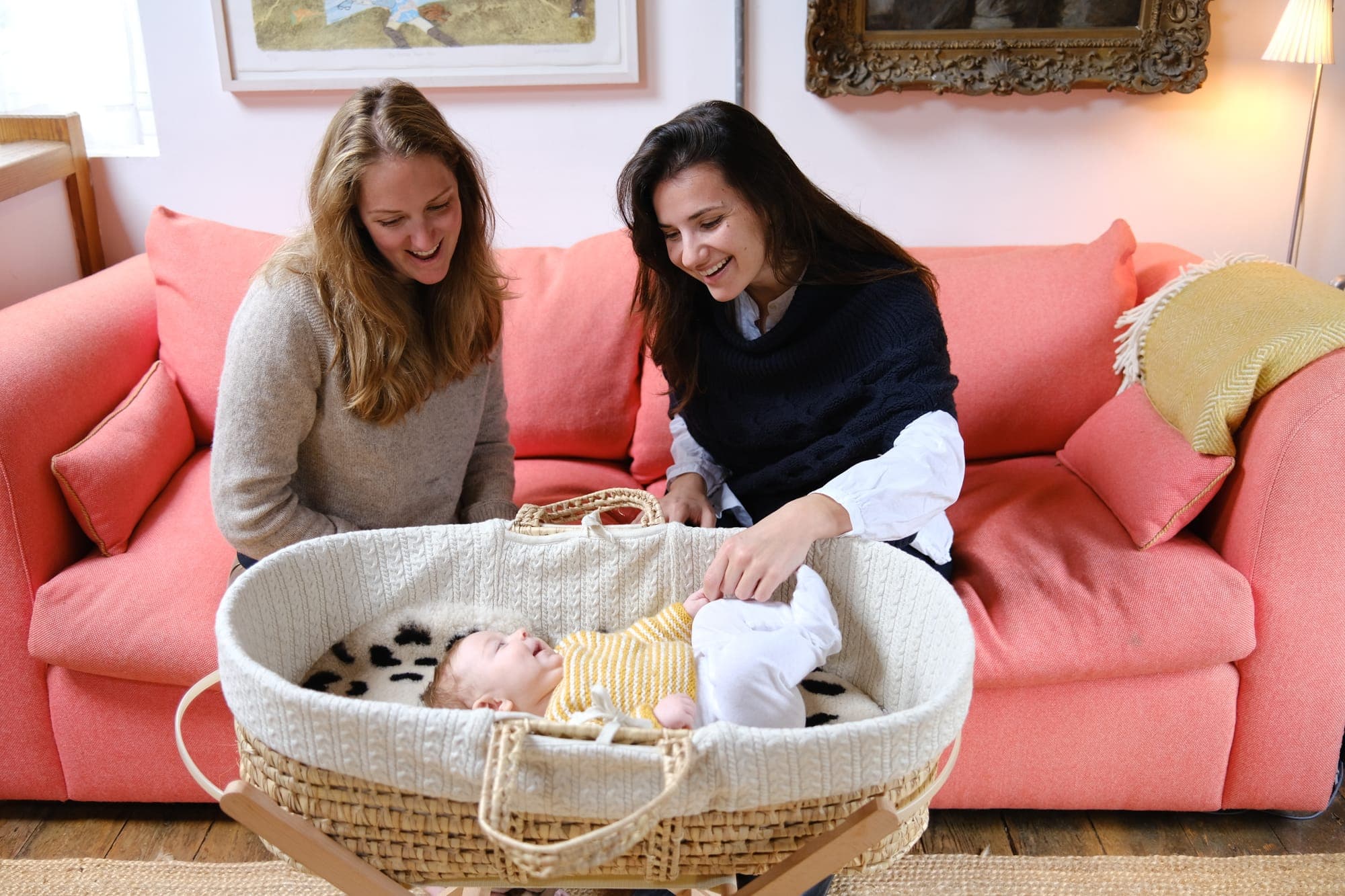
We did not build our model in response to this report. We built it because we experienced the same findings in smaller and more personal form: Sarah is a mother of two, who noticed the gaps when giving birth to her second child in the UK, compared to France. Clarissa is a midwife with over a decade of experience, who felt she could do so much more to support families in this life changing moment of their lives. Together, we created what we wished had existed, and it already resonates with the many families who come to us. A woman who has had a traumatic first birth and cannot face explaining it again to someone new. A woman who went through IVF and was discharged from a fertility clinic that knew everything about her into NHS antenatal care that knows nothing. A woman diagnosed with gestational diabetes at thirty weeks, suddenly routed into a system with no time to explain what changes and what does not.
What we offer is, in effect, the report's central recommendation already in practice. A named midwife, the same one throughout, who knows your history without you repeating it. And also,
- WhatsApp access 7 days a week for addressing any concern, because the report found triage straining under volume it was never resourced for, and a question answered early is a complication avoided later.
- Hourly antenatal appointments and structured workshops, at a time when the investigation found that outpatient appointment numbers have risen without the time allocated per appointment or the antenatal education content being meaningfully redesigned to match the complexity of pregnancies.
- A team of two midwives on call from 37 weeks, so your symptoms of early labour are taken seriously, and appropriate advice is delivered by a known midwife, rather than whoever happens to be on shift.
- Your midwife with you at the hospital for birth: a 2024 Cochrane review of nearly 18,000 women found continuous one-to-one support during labour is associated with shorter labours, fewer caesarean and instrumental births, and women reporting a more positive birth experience.
- Postnatal home visits running for six weeks, into the exact period the report identifies as most neglected, the gap after NHS support ends around day five and before the six week check, which research shows is when mothers are most vulnerable.
We are not trying to replace the NHS, we complement it. Every birth we support happens in hospital, under NHS clinical responsibility. Our strict escalation policy, referring back to NHS or consultant-led care the moment something falls outside our scope, exists precisely so that what we offer makes the whole picture safer, not parallel to it. What we add sits alongside that care, closing the gaps the investigation describes rather than stepping into the hospital's role. The continuity, the time, and the advocacy the system's own review says it cannot yet deliver at scale, that is what we provide. You may not be able to wait years for it to.
If you are reading the findings of this investigation and recognising your own experience in them, that recognition is worth taking seriously. We would be glad to talk you through what continuity of care looks like in practice, and whether it is the right fit for where you are now.
Keep reading
More from the blog.

Let’s start with a chat.
A free 20-minute chat with Clarissa. No pressure, no commitment, just space to ask whatever is on your mind.