
K & J: a rare diagnosis, a remarkable collaboration, and a baby who made it home
When a private 3rd-trimester scan revealed a rare cardiac condition, K. and J. needed more than medicine. They needed a midwife who who knew them.
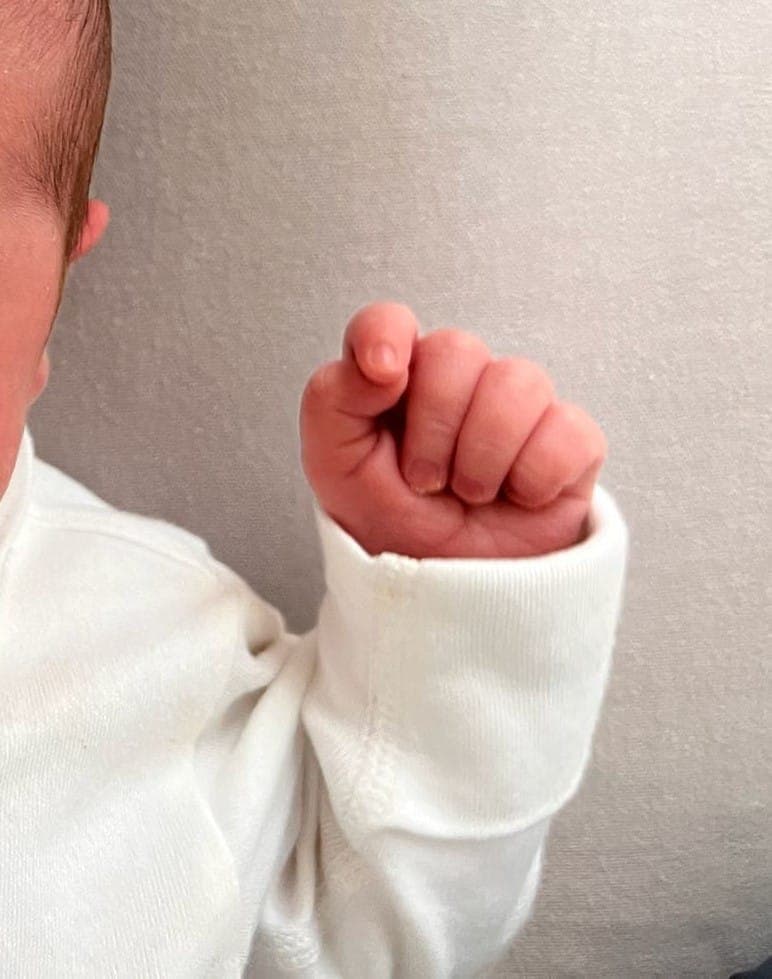
There is a particular kind of silence that follows news you were not prepared for. The kind that settles in after a doctor has said words you didn't expect, in a room you have to walk out of and back into your life.
That is where Keila and her husband J. found themselves in her third trimester. J. had reached out to The Motherhood Practice wanting to make sure his wife had the continuity and attention he felt NHS antenatal care couldn't guarantee. What had begun as a pregnancy with additional support had, in the space of a single appointment, become something else entirely.
The scan that changed everything was one The Motherhood Practice routinely recommends in the 3rd trimester. It is not a scan offered as standard within NHS maternity pathways. And on that day, it found something.
Their baby had a rare cardiac condition, one that would prevent him from breathing independently once born. A condition that, without that scan, would have been missed and would have resulted in a dramatic outcome shortly after birth.
What the system offered
The moment a finding like this is made, the pathway is clear: escalate, and escalate quickly. That is exactly what happened. The Motherhood Practice moved fast, reached out to the NHS, the NHS confirmed the diagnosis, and a plan was put in place. Open heart surgery, two days after birth. A specialist team. The infrastructure that only the NHS, at its best, can provide.
What the NHS could not offer was time. It's no nobody's fault, rather the structural reality of high-volume, consultant-led care for complex cases. Two appointments, each fifteen minutes long. The diagnosis confirmed. The risks outlined. And then, in the way these pathways tend to go, a long waiting period measured in weeks until birth.
When you have just been told that your baby's life will depend on surgery in the days after birth, fifteen minutes is not enough time to understand what you are facing. It is barely enough time to breathe.
The presence that made the difference
This is where Clarissa, The Motherhood Practice lead midwife and K. and J.'s dedicated midwife, became something beyond a clinical role.
She sat with them. She read the evidence. She explained, in language that was honest without being brutal, what the condition was, what surgery would involve, and what the realistic range of outcomes looked like. She found families who had been through the same diagnosis and come through the other side. She connected K. and J. to those families directly, not to offer false comfort, but to offer something more valuable: proof that this road had been walked before, and that others had made it.
Throughout the weeks that followed, Clarissa was constant. Not a new face at each appointment. Someone who already knew, who knew K.'s pregnancy, her fears, her way of processing difficult information, and what she and J. needed from each conversation.
As K. and J. put it: "One of the things we appreciated most was the continuity and personal nature of the care. Having someone who knew our situation and could guide us through each stage made the experience feel much less overwhelming. We felt listened to, supported, and involved in decisions throughout. The service provided both practical help and reassurance during what can be an uncertain time, and we would happily recommend it to other expectant parents."
That is not a small thing. In the middle of the most frightening weeks of their lives, it was, for them, invaluable.
What birth looked like
The birth went well. And two days later, the NHS delivered precisely what it had promised: a surgical team, an operating theatre, and a level of specialist expertise that is genuinely world-class. The baby survived. The surgery was successful.
In the days and weeks that followed, amid the exhaustion and the relief and the long uncertainty of a NICU recovery, K. was able to breastfeed her son from the very beginning. That was not accidental. It was the result of preparation with Clarissa in the weeks before birth, as she helped plan not just for delivery, but also for what comes after it.
After several weeks in hospital, the family came home.
Two systems, doing what they each do best
There is a version of this story in which that third-trimester scan never happens. In which a rare cardiac condition is not discovered until the moment of birth, when there is no plan, no surgical team on standby, no preparation. The NHS was not at fault for not offering that scan: it operates within real constraints, making evidence-based decisions about resource allocation across an enormous population. But within those constraints, some things fall through.
Private midwifery does not replace what the NHS provides. It cannot. It does not have surgical theatres or neonatal intensive care units. What it has is time, attention, continuity, and the clinical knowledge to notice what might otherwise be missed, and to act on it immediately.
In K.'s case, those two things worked together exactly as they should: a scan prompted by a midwife who had the time to recommend it, an anomaly escalated promptly into NHS specialist care, a family supported emotionally through weeks of uncertainty, and a health service that performed a technically complex surgery on a newborn baby and did so successfully.
As Clarissa's role is described by the family: "Clarissa was consistently empathetic, professional, and supportive throughout our experience. Whenever important medical actions or referrals were needed, she handled them efficiently and ensured everything was progressed promptly. She provided valuable training and guidance that helped us feel prepared for the journey ahead. Her communication was excellent, and she always responded in a timely manner, which gave us confidence and reassurance throughout the process."
That efficiency was not administrative. It was clinical. It was the kind of responsiveness that comes from knowing a patient, having capacity, and understanding what is at stake.
This story is not over
K. and J.'s son will need further surgeries in the years ahead. The family knows that. They are carrying a longer road than most, and they are carrying it with the knowledge of what their son has already come through.
We think about them often. We are proud, not of any individual action, but of what happened when a small, attentive private practice and a large, expert public health system did exactly what the other could not, and did it together.
To K. and J.: we send you all our strength for the journey still ahead.
If you are pregnant and want to understand what ongoing midwifery support looks like, particularly if your pregnancy has become more complex than you expected, we would be glad to have an initial conversation. There is no commitment involved, only a chance to talk through what you need and whether we can help.
Let’s start with a chat.
A free 20-minute chat with Clarissa. No pressure, no commitment, just space to ask whatever is on your mind.